

Christopher Fults
Other Attorneys At Schorr Law
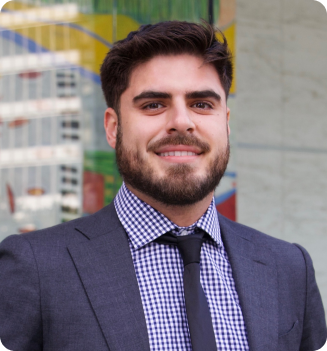
Associate Attorney
Christopher Fults is an associate attorney on Schorr Law’s team of Real Estate Attorneys in Los Angeles. Christopher earned his Juris Doctorate from Duke University School of Law in 2025, where he was awarded the Candace M. Carroll & Leonard B. Simon Scholarship in recognition of his academic achievement. During law school, he served as Treasurer of the Latin American Law Students Association (LALSA) and Director of Outreach for OutLaw, and volunteered with Duke’s Immigration and Refugee Project (DIRP), assisting asylum seekers navigate the immigration process.
Prior to joining Schorr Law, Christopher gained practical legal experience clerking at Georgetown Law Center’s Health Justice Alliance Clinic during his 1L summer, where he worked on landlord-tenant matters, experience that directly informs his practice in real estate litigation.
Christopher received his Bachelor of Arts in Political Science and Psychology from the University of California, Los Angeles in 2021, and is admitted to practice law in California.
At Schorr Law, Christopher’s practice focuses on real estate litigation.
Outside of the office, Christopher enjoys reading, hiking, and beach volleyball.
CONTACT US
Schedule a Consultation
We are happy to provide free consults for all qualified matters. Landlord and tenant matters require a fee.
PRESS
Recent Blogs

California Mechanics Lien: How Property Owners Can Fight Back
Mechanics Lien on Your Property? A California...

Can You Pave a Gravel Road Easement in California?
Paving a Gravel Driveway If you hold an easement...

What Montecito Country Club v. Root Means for California Property Owners
Montecito County Club v. Root Your Hedge, Your...