

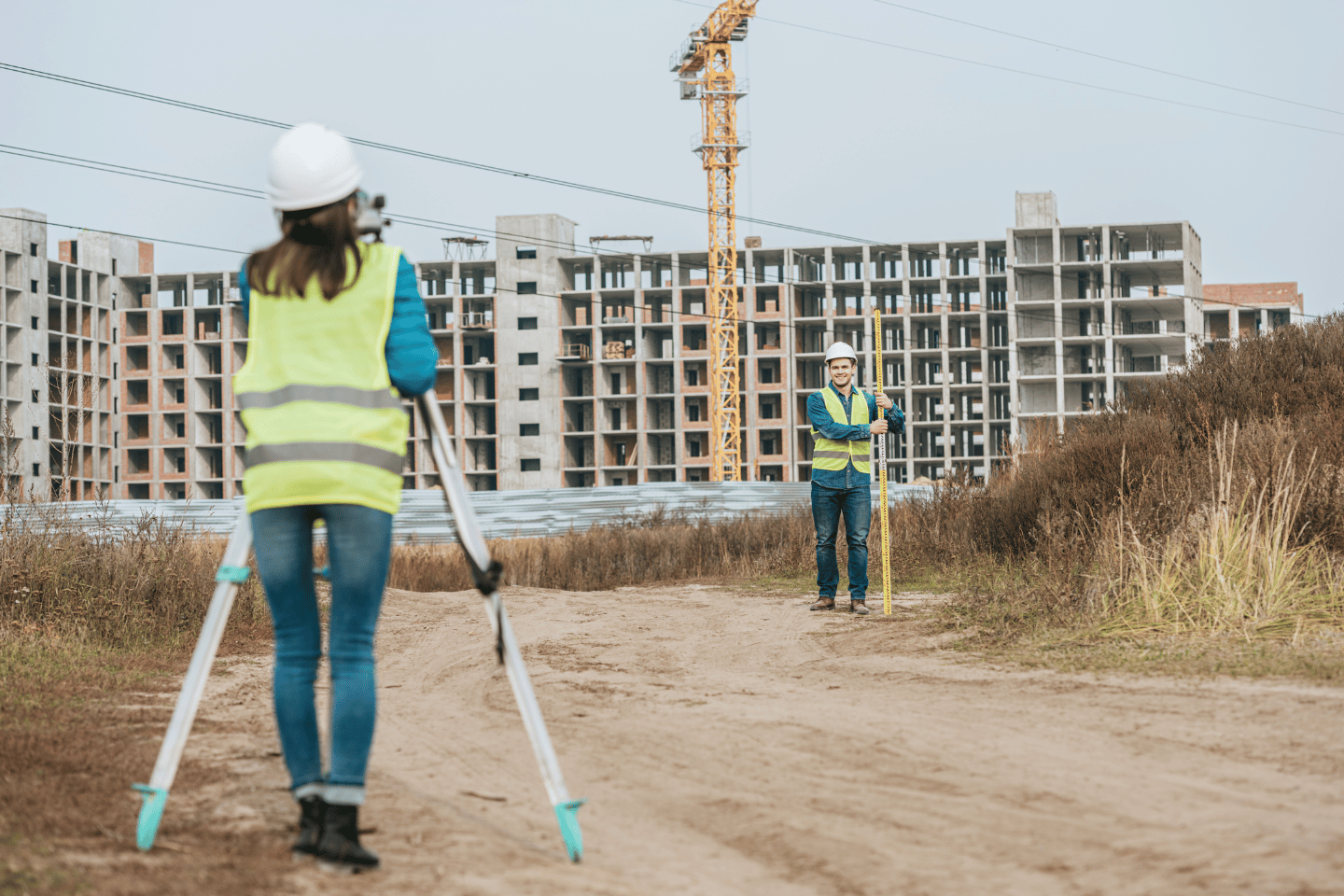
Metes and Bounds is a method of legally describing real property by identifying the property’s boundaries through specific measurements, directions, and physical landmarks. Rather than relying on a lot number or subdivision map, the description traces the property’s boundaries from a designated starting point.
This method is commonly found in older property records and in situations where a parcel does not fit neatly within a recorded subdivision.
When a legal description of a property is prepared by a professional surveyor, it may include a paragraph describing the property using metes and bounds. The legal description is often difficult to read unless you have professional training in surveying or property descriptions.
How Metes and Bounds Works

A metes and bounds description generally identifies a starting point, often called the point of beginning (POB), and then describes the property’s boundary by giving a series of distances and directions.
For example, a legal description might direct the reader to begin at a particular monument, proceed a certain distance in a specified direction, then continue along additional boundary lines until returning to the original starting point.
The description effectively creates a written outline of the property.
Metes vs. Bounds: What’s the Difference?
The two terms describe different parts of the legal description.
Metes refer to the measurements of the property’s boundaries, such as distances and directions.
Bounds refer to the physical features or landmarks that identify the boundaries, such as roads, rivers, adjoining properties, monuments, or other identifiable features.
Together, they provide a method for precisely identifying a parcel of land.
Why Metes and Bounds Matter in Property Descriptions

A legal description must identify the property with enough certainty that the parcel can be distinguished from neighboring properties.
Metes and bounds descriptions are particularly useful for irregularly shaped parcels, large tracts of land, and properties created before modern subdivision mapping became common.
An inaccurate or ambiguous description, however, can create serious title and boundary problems.
Common Legal Issues With Metes and Bounds Descriptions
Metes and bounds descriptions can become the subject of disputes when measurements are inconsistent, landmarks have disappeared, or the description does not match a modern survey.
Property owners may disagree about the location of a boundary, particularly when older descriptions rely on natural landmarks that have changed over time. Courts may need to review historical deeds, surveys, maps, and other evidence to determine the property’s actual boundaries.
A professional land survey can help identify property lines, locate monuments, and evaluate discrepancies between recorded descriptions and physical conditions.
Metes and Bounds vs. Lot and Block Descriptions
A lot and block description identifies property by referring to a recorded subdivision map, such as “Lot 12, Block 3.” Metes and bounds instead describe the property’s boundaries through measurements, directions, and landmarks.
Lot and block descriptions are generally simpler to use, while metes and bounds can provide greater flexibility for describing irregular parcels.
California Law Considerations

California property deeds must contain a legal description that sufficiently identifies the real property being transferred. Metes and bounds descriptions may be used when appropriate, although California commonly relies on recorded subdivision maps for many properties. An assessor’s parcel number may help identify a property but is not necessarily a substitute for a sufficient legal description.
When a boundary is disputed, a professional survey and review of the property’s chain of title may be necessary to determine the correct legal boundaries.
For disputes involving conflicting property lines, legal descriptions, or encroachments, property owners may need assistance from a California boundary dispute attorney.
Real Estate and Financing Terms
| Legal Description | Parcel |
| Lot and Block | Encroachment |
| Survey | Easement |
| Boundary Dispute | Title |
If you are involved in a real estate dispute and mediation has been requested or required, speak with a real estate litigation attorney before agreeing to settlement terms.
Need Legal Help Related to Your Real Estate Matter?


Recent Blogs

California Equitable Easements for Driveways: Miller v. Johnston
California Equitable Easements for Driveways...

California Mechanics Lien: How Property Owners Can Fight Back
Mechanics Lien on Your Property? A California...
Can You Pave a Gravel Road Easement in California?
Can You Pave a Gravel Road Easement in...
California Counties Served for Real Estate Litigation Matters :



-
 1901 Avenue of The Stars, Suite 615
Los Angeles, California 90067


-
- 1901 Avenue of The Stars, Suite 615
Los Angeles, California 90067