

Intestate refers to the situation where a person dies without a valid will or without estate planning documents that fully control how their property should pass. When someone dies intestate, their property is distributed according to the intestacy laws of the state where they lived rather than according to personal instructions or estate planning documents.
In California, intestacy laws establish a specific order of succession that determines who inherits the estate.
How Intestate Succession Works?
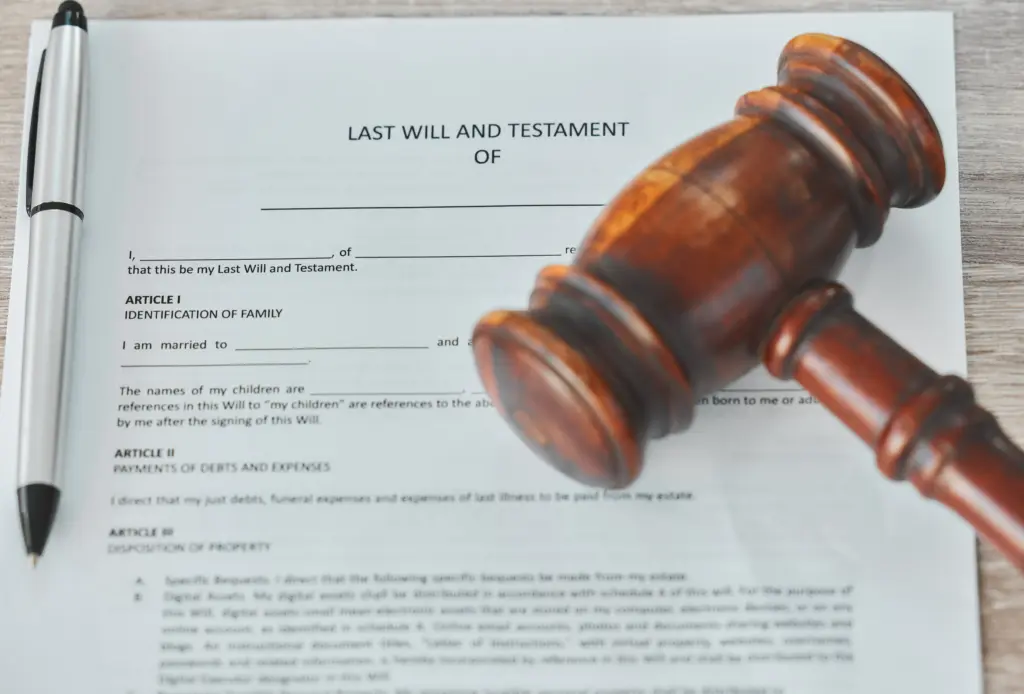
When there is no valid will, the estate passes to heirs based on statutory priority rules. California intestacy laws generally prioritize:
● Surviving spouse or domestic partner
● Children and descendants
● Parents
● Siblings
● More distant relatives if necessary
The closer the familial relationship, the higher the priority to inherit. California’s intestate succession rules determine default inheritance rights when a decedent has not left a valid will or other controlling estate plan. There are charts about intestate succession and it can be interesting to learn who the law prioritizes by default.
Role of the Probate Court
An intestate estate is typically handled through probate court.
The court appoints an administrator to manage the estate, gather assets, pay debts, and distribute property to the lawful heirs. The administrator performs duties similar to an executor, but instead of following a will, they must follow California intestacy statutes.
The court oversees the process to ensure assets are distributed legally and fairly. Parties often try to avoid probate, and one common way to do that is to place property in a trust or use other estate planning tools.
Property Subject to Intestate Succession
Only certain assets pass through intestate succession. This usually includes:
● Solely owned real estate, although partial interests may pass, especially for a tenant in common
● Personal property owned only by the decedent
● Bank accounts without beneficiaries
Some assets may transfer outside of probate, such as jointly owned property, trust assets, transfer-on-death assets, or accounts with designated beneficiaries. For real estate, questions may also arise about how to change title to real property after an owner dies.
Why Intestacy Can Create Problems?

Dying intestate can create uncertainty and disputes among family members. Without a will:
● The decedent’s wishes are unknown
● Certain individuals may inherit unexpectedly
● Distribution may not reflect personal relationships
● Probate proceedings may become more complicated
This is why estate planning is often recommended. It may also help clarify which assets are part of the probate estate and which are not subject to probate.
Common Legal Issues
Disputes involving intestate estates frequently involve heirship and distribution rights.
Questions may arise regarding who qualifies as an heir, whether assets belong to the estate, or how property should be divided. Family conflicts are common, particularly in blended families or situations involving unmarried partners.
These matters are resolved under probate law. If a dispute develops over heirship, estate property, or distribution rights, the matter may require probate litigation.
California Intestacy Laws
California intestate succession is governed by the California Probate Code §§ 6400–6414.
The statutes establish:
● Order of inheritance
● Rights of spouses, domestic partners, and children
● Distribution of community and separate property
Courts apply these laws strictly when no valid will exists.
Related Estate and Probate Terms
| Intestate Succession | Estate |
| Heir | Will |
| Administrator | Beneficiary |
| Probate | Escheat |
Need Legal Help Related to Your Real Estate Matter?
If you are facing a property lien or need to enforce a judgment, contact our experienced real estate attorneys today to schedule a consultation.


PRESS
Recent Blogs

California Mechanics Lien: How Property Owners Can Fight Back
Mechanics Lien on Your Property? A California...
Can You Pave a Gravel Road Easement in California?
Paving a Gravel Driveway If you hold an easement...

What Montecito Country Club v. Root Means for California Property Owners
Montecito County Club v. Root Your Hedge, Your...
California Real Estate Litigation Representation