

Updated on April 20, 2026
Easement in Gross vs. Easement Appurtenant: The Key Differences for California Landowners
When it comes to property rights in California, easements can significantly impact how land is used, valued, and transferred. Yet many property owners don’t fully understand the distinction between an easement in gross and an easement appurtenant, a difference that can have serious legal and financial consequences. If you’re dealing with a property dispute, buying land, or reviewing title documents, understanding these two types of easements is essential. In California, you are unlikely to encounter as many easements in gross as you would easement appurtenant. The vast majority of easements existing or even being created are appurtenant.
What Is an Easement?
An easement is a legal right that allows one party to use another person’s property for a specific purpose, without owning it. These rights are typically not exclusive.
Common examples include:
- Driveway access
- Utility lines
- Drainage rights
- Shared pathways
In California real estate law, easements are generally categorized into two main types: easements appurtenant and easements in gross.
What Is an Easement Appurtenant?
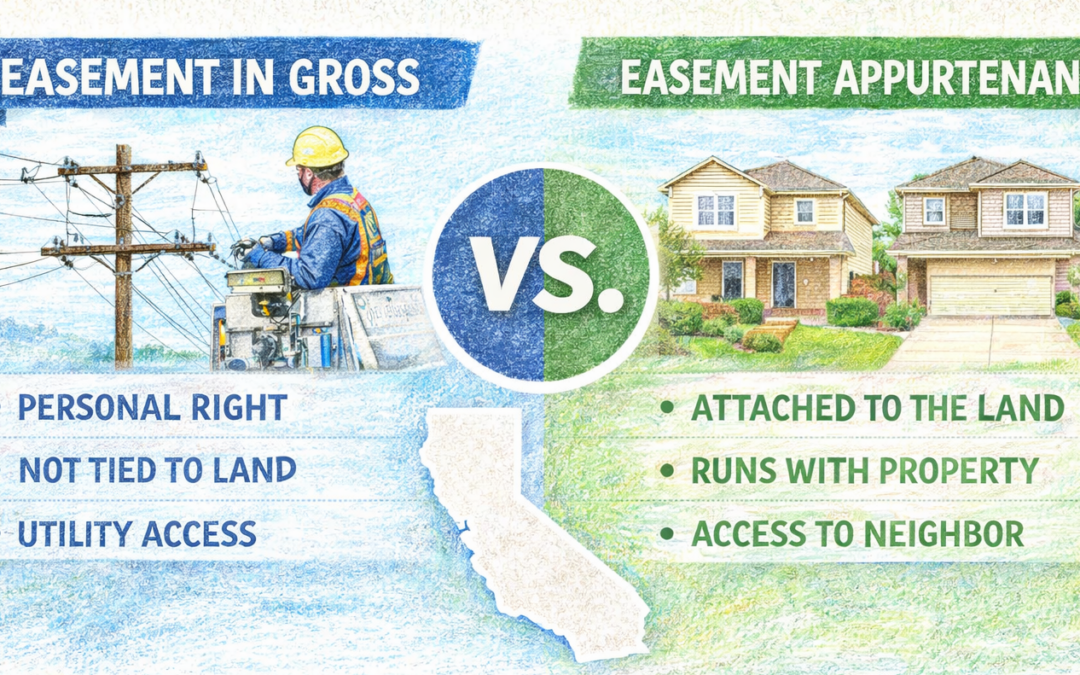
An easement appurtenant is tied directly to the land itself. It benefits a specific parcel of property (called the dominant tenement) and burdens another (the servient tenement). These types of easements often “run with the land” meaning they attach to the property so that if the property is sold the successor in interest on title enjoys the same benefits of the easement.
Key Characteristics:
- Runs with the land (automatically transfers with property ownership)
- Involves two properties
- Permanent unless legally terminated
- Common in residential settings
Example: If your neighbor has a legal right to use your driveway to access their property, that right is likely an easement appurtenant. If they sell their home, the easement transfers to the new owner.
What Is an Easement in Gross?
An easement in gross benefits a specific individual or entity, not a parcel of land.
Key Characteristics:
- Personal to an individual or company
- Does NOT attach to a property
- May or may not be transferable
- Common for utilities and commercial uses
Example: A utility company like Southern California Edison may have an easement in gross to run power lines across your property. That right belongs to the company, not to any neighboring land.
| Feature | Easement Appurtenant | Easement in Gross |
|---|---|---|
| Attached to land? | Yes | No |
| Transfers with sale? | Yes | Usually no (unless commercial) |
| Involves two parcels? | Yes | No |
| Common use | Access between properties | Utilities, pipelines |
| Beneficiary | Property owner | Individual or entity |
Why This Distinction Matters for California Landowners
Understanding the type of easement affecting your property can directly impact:
1. Property Value An easement appurtenant may enhance value (e.g., guaranteed access), while an easement in gross, especially for utilities, may limit development potential.
2. Transferability If you’re buying or selling property, appurtenant easements will transfer automatically, while easements in gross may not.
3. Legal Disputes Misunderstanding easement types often leads to disputes over:
- Scope of use
- Maintenance responsibilities
- Unauthorized expansion of rights
4. Development Restrictions Certain easements, especially in gross, can restrict building, landscaping, or structural changes.
Common Easement Disputes in California
At Schorr Law, we frequently see disputes involving:
- Property owners blocking access tied to an easement appurtenant
- Utility companies exceeding the scope of an easement in gross
- Unclear or poorly drafted easement agreements
- Conflicts over maintenance and repair responsibilities
- Title issues during property transactions
These disputes can escalate quickly and may require legal intervention to resolve.
How to Determine What Type of Easement You Have
To identify whether an easement is in gross or appurtenant, review:
- Your property deed
- Title report
- Recorded easement agreements
- Survey documents
Look for language indicating whether the easement benefits a person/entity or a parcel of land. If the language is unclear, a real estate attorney can help interpret your documents and protect your rights.
When to Contact a California Real Estate Attorney
You should consult an attorney if:
- You’re unsure about the type or scope of an easement
- A neighbor is interfering with your property rights
- You’re planning to build near or over an easement
- You’re buying property with an existing easement
- A dispute has escalated or may lead to litigation
- Protect Your Property Rights with Schorr Law
Easement issues can be complex, especially under California law. Whether you’re dealing with an easement dispute, reviewing a property purchase, or seeking to enforce your rights, the experienced real estate attorneys at Schorr Law can help.
Frequently Asked Questions (FAQ)
1. What is the difference between an easement appurtenant and an easement in gross?
An easement appurtenant is tied to a property and transfers automatically when the property is sold. An easement in gross benefits a person or company and is not tied to ownership of land.
2. Which type of easement is more common in California?
Easements appurtenant are far more common, especially in residential settings. Easements in gross are typically used for utilities or commercial purposes.
3. Does an easement appurtenant transfer to a new owner?
Yes. Easements appurtenant “run with the land,” meaning they automatically transfer to new owners when the property is sold.
4. Can an easement in gross be transferred?
Sometimes. Commercial easements in gross, such as those held by utility companies, may be transferable. Personal easements in gross are usually not.
5. How do I know if my property has an easement?
You can check your: Property deed, Title report, Recorded easement documents, and Survey. If it’s unclear, a real estate attorney can help interpret the language.
6. Can an easement affect my property value?
Yes. An easement appurtenant may increase value by providing access, and an easement in gross may decrease value if it restricts development or use.
7. Can I build over an easement on my property?
In most cases, no. Building over an easement can interfere with its use and may lead to legal disputes or forced removal of the structure.
8. What happens if someone blocks an easement?
Blocking an easement, especially an appurtenant one, can lead to legal action. The benefiting party may seek a court order to restore access and enforce their rights.
About the Author

Zachary D. Schorr is a California real estate litigation attorney and the founding attorney of Schorr Law. He represents clients in specific performance actions, partition lawsuits, quiet title disputes, and complex real estate litigation throughout Southern California.
📍 Schorr Law
Call Us: (866) 999-2990
📧 zschorr@schorr-law.com
Full Bio | Contact | Instagram | View All Articles