

- Why Does Easement Type Matter in California Property Disputes?
- What Is an Easement in California?
- How Do Appurtenant Easements Affect Property Rights in California?
- How Do Easements in Gross Affect Property Use and Disputes in California?
- When Does Easement Type Matter in Real California Property Situations?
- Common Easement Disputes in California
- How to Determine What Type of Easement You Have in California?
- When Should You Contact a California Real Estate Attorney About an Easement?
- Frequently Asked Questions About Easement Issues in California
Updated on April 29, 2026
Most easement issues in California do not create problems—until a dispute, property sale, or development decision brings the issue into focus.
Easement type can directly affect who can use the property, whether those rights transfer to a new owner, and how the easement can be enforced or challenged. These issues commonly arise in situations involving blocked access, unclear deed language, utility use, or title review during a transaction.
Understanding whether an easement is appurtenant, in gross, or based on how it was created becomes critical when a disagreement arises over the scope, transferability, or enforcement of those rights.
Why Does Easement Type Matter in California Property Disputes?
Easement type becomes critical when a disagreement arises over how a property can be used, who benefits from the easement, or whether the right continues after a sale or transfer.
The classification of an easement can directly affect:
- Property Value and Use Restrictions – An easement appurtenant may enhance value by providing reliable access, while an easement in gross—especially for utilities—may limit development, building, or landscaping. These differences often become critical when a property owner attempts to improve or sell the land.
- Transferability During Sale or Purchase – When property is transferred, an appurtenant easement typically runs with the land, allowing the new owner to inherit the same rights. In contrast, an easement in gross may not transfer unless specific conditions are met, which can create issues during escrow or title review.
- Scope of Use and Legal Disputes – Many disputes arise when one party believes the easement allows broader use than originally intended. The type of easement can influence how courts interpret access rights, maintenance obligations, and whether expanded use is permitted.
- Development and Property Planning – Certain easements can restrict how land is developed. Utility easements in gross, for example, may limit construction or require ongoing access for maintenance, which can lead to conflicts if a property owner builds over or interferes with the easement.
What Is an Easement in California?
An easement is a legal right that allows one party to use another person’s property for a specific, limited purpose without owning the land, and may take different forms depending on the types of easements recognized under California law.
In California property disputes, the focus is typically on how the easement is classified and what rights it allows to be enforced.
One of the most common classifications involved in property disputes is the appurtenant easement.
How Do Appurtenant Easements Affect Property Rights in California?
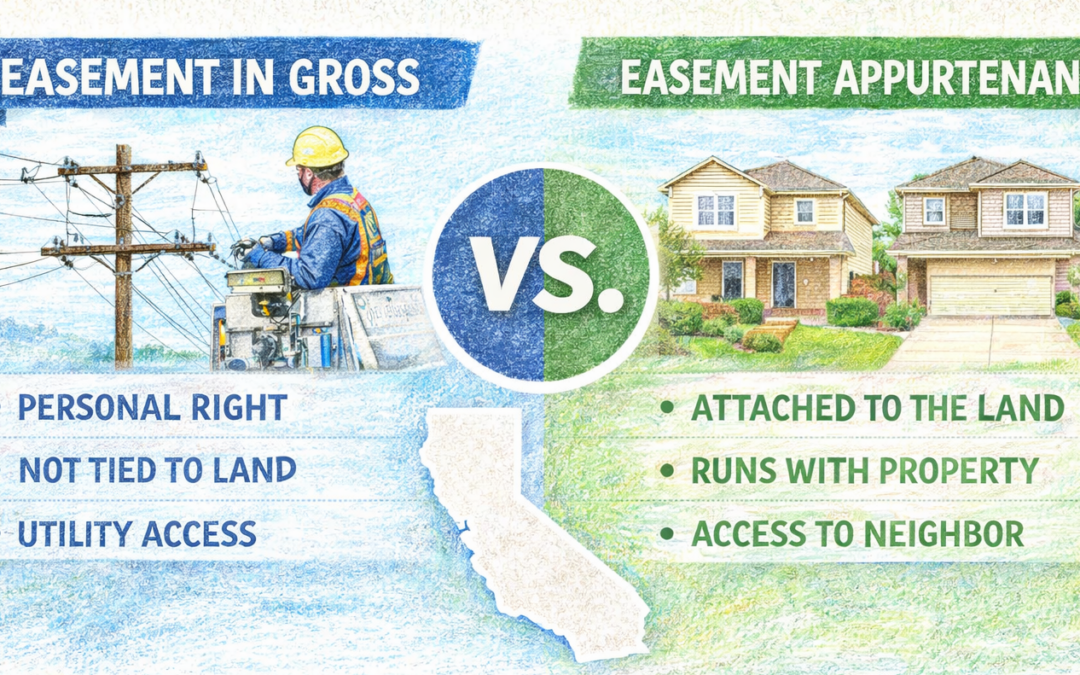
An easement appurtenant is tied to a specific parcel of land, meaning it benefits one property (the dominant tenement) and burdens another (the servient tenement). Because it runs with the land, the easement typically transfers automatically when the property is sold.
In disputes, this matters because the right belongs to the land itself—not to an individual—allowing future owners to enforce the same access or use rights against the burdened property.
For example, if a neighboring property has a legal right to use a driveway for access, that right generally continues after the property is sold. Conflicts often arise when a property owner attempts to block access, limit use, or challenge whether the easement still applies.
A different set of issues arises when the easement benefits a person or entity rather than a parcel of land.
How Do Easements in Gross Affect Property Use and Disputes in California?
An easement in gross benefits a specific individual, company, or entity rather than a parcel of land. Because the right is tied to a party rather than the property, it does not automatically transfer with ownership and depends on the terms of the original agreement.
In disputes, easements in gross often involve utilities or commercial operators using private property for a defined purpose. Conflicts typically arise over whether that use stays within the permitted scope.
For example, a utility company may have the right to install and maintain power lines across a property. Disputes can occur if the company expands its use, increases access, or interferes with the property beyond what was originally allowed.
These distinctions become clearer when applied to common real-world property situations.
When Does Easement Type Matter in Real California Property Situations?
These distinctions become most important when applied to real property situations where ownership, use, or enforcement of rights is in question.
| Situation | Why Easement Type Matters |
|---|---|
| Property is being sold or transferred | Determines whether the easement runs with the land or remains personal to a party |
| A neighbor blocks access | An appurtenant easement may give enforceable rights tied to the property |
| A utility company uses private land | An easement in gross may allow access, but only within a defined scope |
| A property owner expands use of an easement | The type and original purpose limit whether increased use is allowed |
| A title report reveals an easement | Classification helps determine whether the easement benefits land or an entity |
| A dispute arises over maintenance or access | The type of easement influences responsibility and enforceability |
| A property owner plans construction | Certain easements may restrict building, access, or land use |
| A party seeks to terminate an easement | The type and method of creation affect whether termination is possible |
In practice, many easement issues become disputes when these rights are challenged or exceeded.
Common Easement Disputes in California
Easement disputes in California typically arise when property owners, neighbors, or third parties disagree about how an easement can be used, who can enforce it, or whether its scope has changed over time.
One of the most common issues involves blocked or restricted access. A property owner may attempt to limit or completely block access, which can lead to disputes involving interfering with an easement or denial of access rights.
Disputes also arise when there is overuse or expansion of easement rights. For example, an easement originally intended for residential access may later be used for increased traffic, commercial activity, or purposes not clearly defined in the original agreement. These conflicts often depend on how the scope of the easement is interpreted.
Utility and commercial easements—often easements in gross—frequently lead to conflict when property owners believe the use exceeds what was originally permitted. This may include increased access, expanded use, or interference with improvements such as landscaping, fencing, or construction.
Maintenance and repair responsibilities can also become a source of disagreement, particularly when the easement agreement does not clearly define which party is responsible for upkeep.
Unclear or outdated easement language may create further issues. Older deeds or recorded documents may not reflect current use, property boundaries, or modern development patterns, leading to uncertainty about the extent of the rights granted.
Easement disputes also surface during property transactions or title review, when buyers, lenders, or title companies raise concerns about recorded easements that are not clearly defined. These issues can delay or complicate a sale or refinance.
How to Determine What Type of Easement You Have in California?
Determining the type of easement affecting a property requires reviewing recorded documents and, in some cases, how the easement has been used over time.
Start by examining key records, including the property deed, title report, recorded easement agreements, and any available survey or subdivision maps. These documents may indicate whether the easement benefits a specific parcel of land or a particular individual, company, or utility.
The language used in these documents is critical. References to a “benefited property” or rights tied to a neighboring parcel may indicate an appurtenant easement, while language granting rights to a named individual, company, or utility may suggest an easement in gross. However, not all documents are clearly drafted, and older records may leave room for interpretation.
In some situations, historical use may also influence how an easement is interpreted. Courts may consider access patterns, maintenance behavior, and whether the use has expanded beyond its original purpose.
When the language is unclear or a dispute has developed, a more detailed legal analysis may be necessary to determine how the easement will be interpreted under California law.
When Should You Contact a California Real Estate Attorney About an Easement?
Easement issues do not always require legal action, but certain situations may involve enforceable property rights or affect ownership, use, or transfer of the property.
You may want to speak with a Los Angeles real estate attorney if there is uncertainty about the type or scope of an easement, particularly when the language in the deed or recorded documents is unclear. Questions about whether an easement runs with the land or who has the right to enforce it often require legal interpretation.
Legal guidance may also be important if a neighbor or third party is interfering with access, restricting use, or asserting rights beyond what the easement allows.
If you are planning to build, develop, or make improvements on property affected by an easement, understanding the limitations imposed by that easement can help prevent future conflicts or claims of interference.
Easement issues may also arise during property transactions, when buyers, sellers, or lenders need to evaluate how an easement affects title, transferability, or property value.
In more complex situations—such as disputes involving utilities, unclear historical use, or potential termination of an easement—a legal review may help determine the appropriate course of action and reduce the risk of ongoing conflict.
Frequently Asked Questions About Easement Issues in California
Can a neighbor legally block an easement in California?
In most cases, no. If the easement grants access rights, blocking it can lead to legal action. The affected party may seek a court order to restore access.
Can someone expand the use of an easement beyond its original purpose?
Not usually. Easements are limited by their intended use. Expanding use—such as increasing traffic or changing purpose—can create a dispute.
Does an easement always transfer when property ownership changes?
It depends on the type. Easements tied to land often transfer automatically, while others may depend on the terms of the agreement.
Can a utility company enter private property under an easement?
Yes, if a valid easement exists. However, the company must stay within the limits of the rights granted and cannot exceed those terms.
Can an easement affect property value or development?
Yes. Easements can limit how property is used, restrict construction, or reduce flexibility in development, depending on their scope.
How do I know if an easement is being overused?
Overuse may occur if the easement is used more frequently, more intensely, or for a different purpose than originally allowed.
Can an easement be terminated in California?
In some cases. Easements may end through abandonment, agreement, merger of ownership, or other legal grounds depending on the situation.
What should I do if an easement dispute is not clearly defined in documents?
When language is unclear, courts may consider historical use, intent, and surrounding circumstances. Legal review is often necessary in these situations.
About the Author

Zachary D. Schorr is a California real estate litigation attorney and the founding attorney of Schorr Law. He represents clients in specific performance actions, partition lawsuits, quiet title disputes, and complex real estate litigation throughout Southern California.
📍 Schorr Law
Call Us: (866) 999-2990
📧 zschorr@schorr-law.com
Full Bio | Contact | Instagram | View All Articles